GS Enterprises offers ethylene oxide sterilization equipment for customers in Punjab who need a low-temperature sterilization solution for products that cannot be processed by steam or dry heat. The GS-ETO-80 runs a fully automatic cycle covering conditioning, gas exposure and post-cycle aeration under programmable control.
ETO is not the right method for every load. For Punjab applications, chamber size, cycle parameters and safety provisions should be selected after understanding your product, packaging and batch size, so the equipment matches the sterilization process that needs to be developed and validated.
Alongside ETO systems, GS Enterprises offers autoclaves, hydrogen peroxide plasma sterilizers, washer disinfectors and ultrasonic cleaners for customers in Punjab. The suitable sterilization method depends on the product, packaging, material and process requirements.
GS Enterprises supports customers looking for ETO sterilization equipment in Punjab, with installation guidance, equipment support and service assistance based on the project requirements.
Request a Quote ✉Ethylene oxide penetrates sealed packaging and complex internal surfaces at low temperature, which makes it suitable for plastic devices, tubing sets and packaged components that autoclaving would destroy.
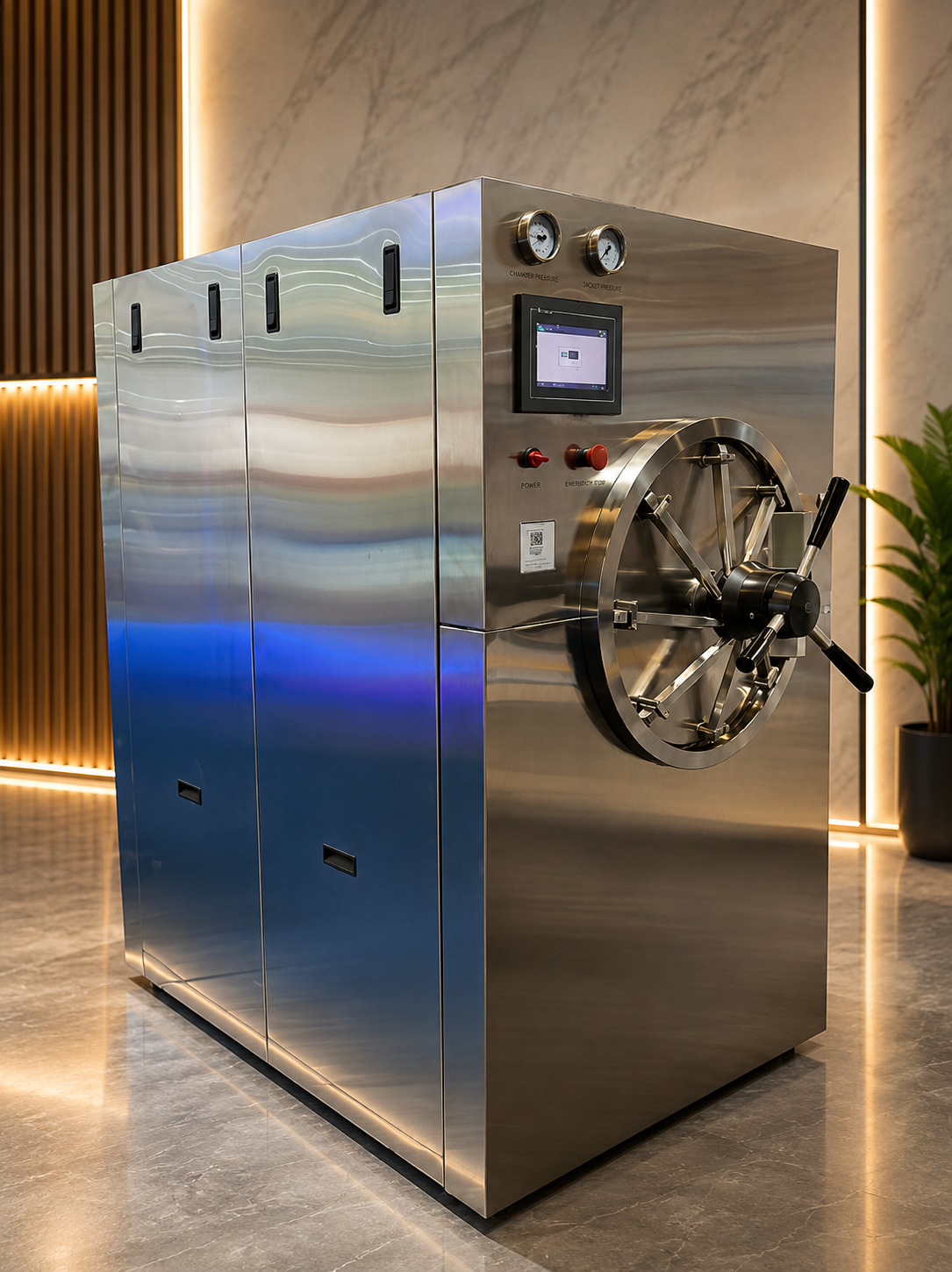
An ETO sterilizer holds a sealed chamber at controlled temperature and humidity, admits ethylene oxide gas for a set exposure period, then aerates the load to clear residual gas before it is handled.
Because the process runs well below autoclave temperatures, heat-sensitive products can be processed without exposing them to the higher temperatures used in steam sterilization. Because the gas penetrates packaging, products can be sterilized in their final packs.
Cycle parameters must be developed and validated for your specific product and packaging. We supply the equipment and the operating data; the validation is built around your process.
Steam autoclaving is faster and cheaper where the product tolerates it. Hydrogen peroxide plasma is quicker to turn around than ETO but penetrates long lumens less readily. ETO suits sealed packs, long narrow channels and materials that absorb moisture badly.
The trade-off with ETO is cycle time: aeration adds hours, and the gas needs controlled handling throughout. For high-throughput reprocessing, that matters.
Tell us the product, the packaging and the daily volume, and we will say plainly which of the three fits, including when it is not ETO.
GS Enterprises supplies ETO sterilizers and Ethylene Oxide sterilization equipment for hospitals, pharmaceutical units, medical device manufacturers, laboratories and industrial facilities in Punjab. Our equipment can be specified around your chamber size, product type, packaging and batch requirements.
The 80 litre GS-ETO-80 is suitable for smaller batches, while larger ETO sterilizer chambers can be specified according to tray dimensions, product configuration and production volume.
Share your load dimensions and batch requirements so the sterilizer configuration can be planned around your actual process.
Programmable controls manage important cycle conditions such as temperature, humidity, exposure and aeration according to the configured process.
Cycle conditions are monitored during operation, with alarms and indications helping operators identify process deviations.
Ethylene oxide requires controlled handling. The supplied configuration includes features such as gas detection, alarms, door interlocks and controlled exhaust arrangements.
Site requirements for ventilation, gas storage, installation and operator procedures should be planned according to applicable safety requirements.
GS Enterprises provides installation support and service assistance for customers requiring ETO sterilization equipment in Punjab.
Spare parts, preventive maintenance and operator guidance are available for the equipment we supply.
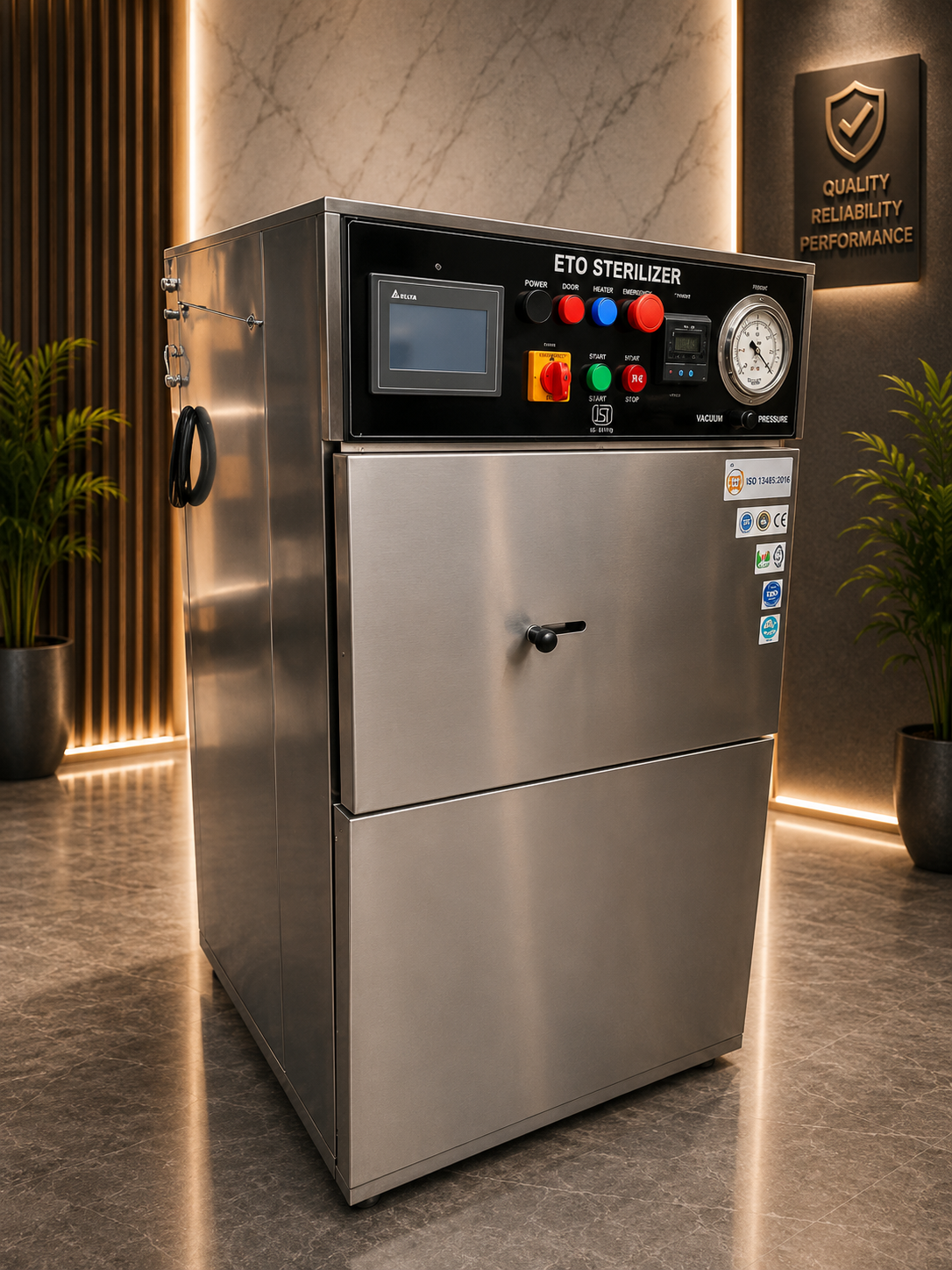
Fully automatic Ethylene Oxide sterilization equipment for heat-sensitive medical devices, tubing, packaged components and other products that require low-temperature processing. The GS-ETO-80 is the standard 80 litre model, with larger chamber configurations available.
Programmable cycle control, gas detection, safety interlocks and controlled aeration are included according to the supplied configuration.
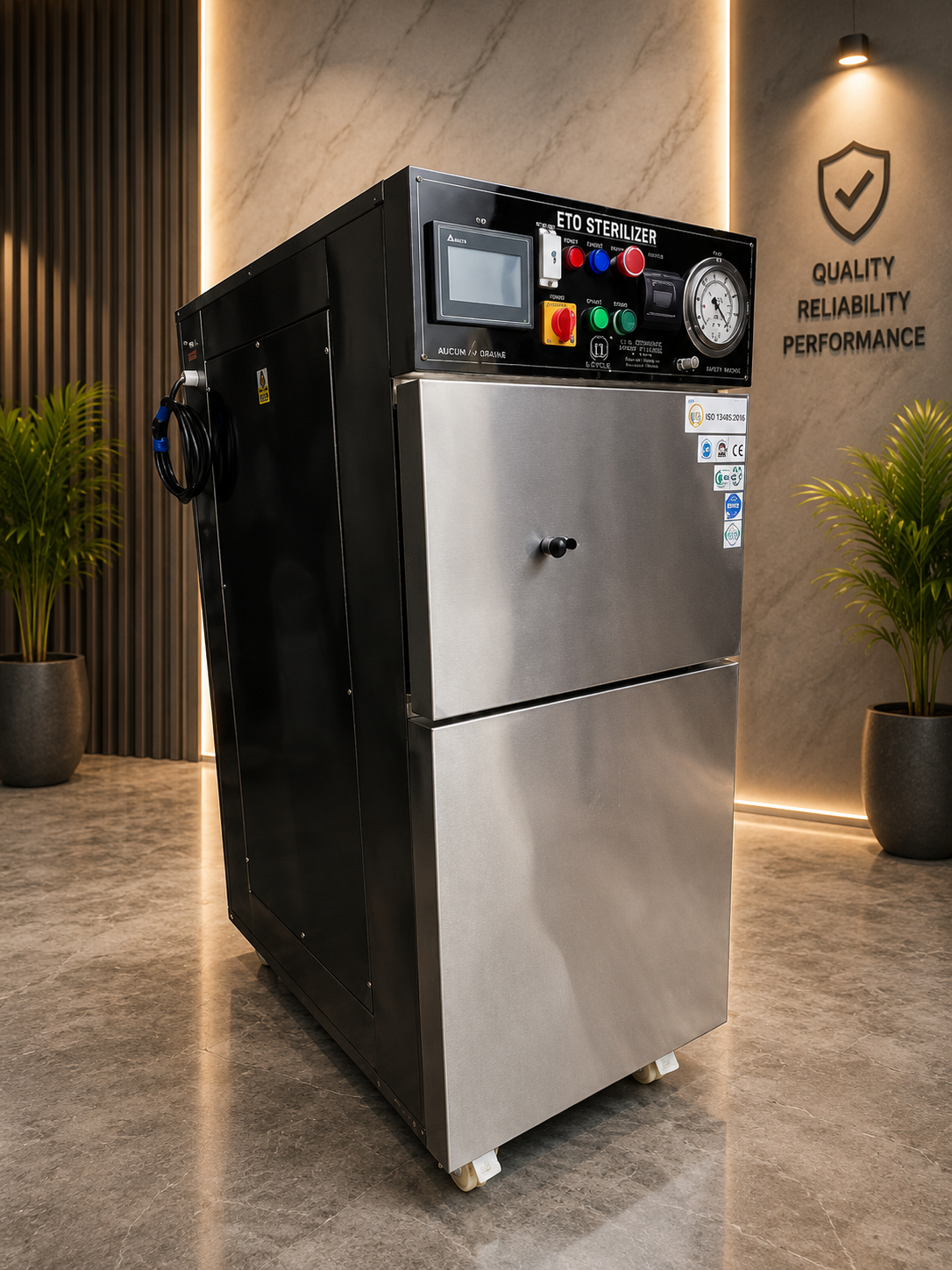
View DetailsA combined sterilization system designed for applications requiring both steam and Ethylene Oxide sterilization in one equipment configuration.
It can be considered where some products tolerate steam while other heat-sensitive products require low-temperature ETO processing.
View Details
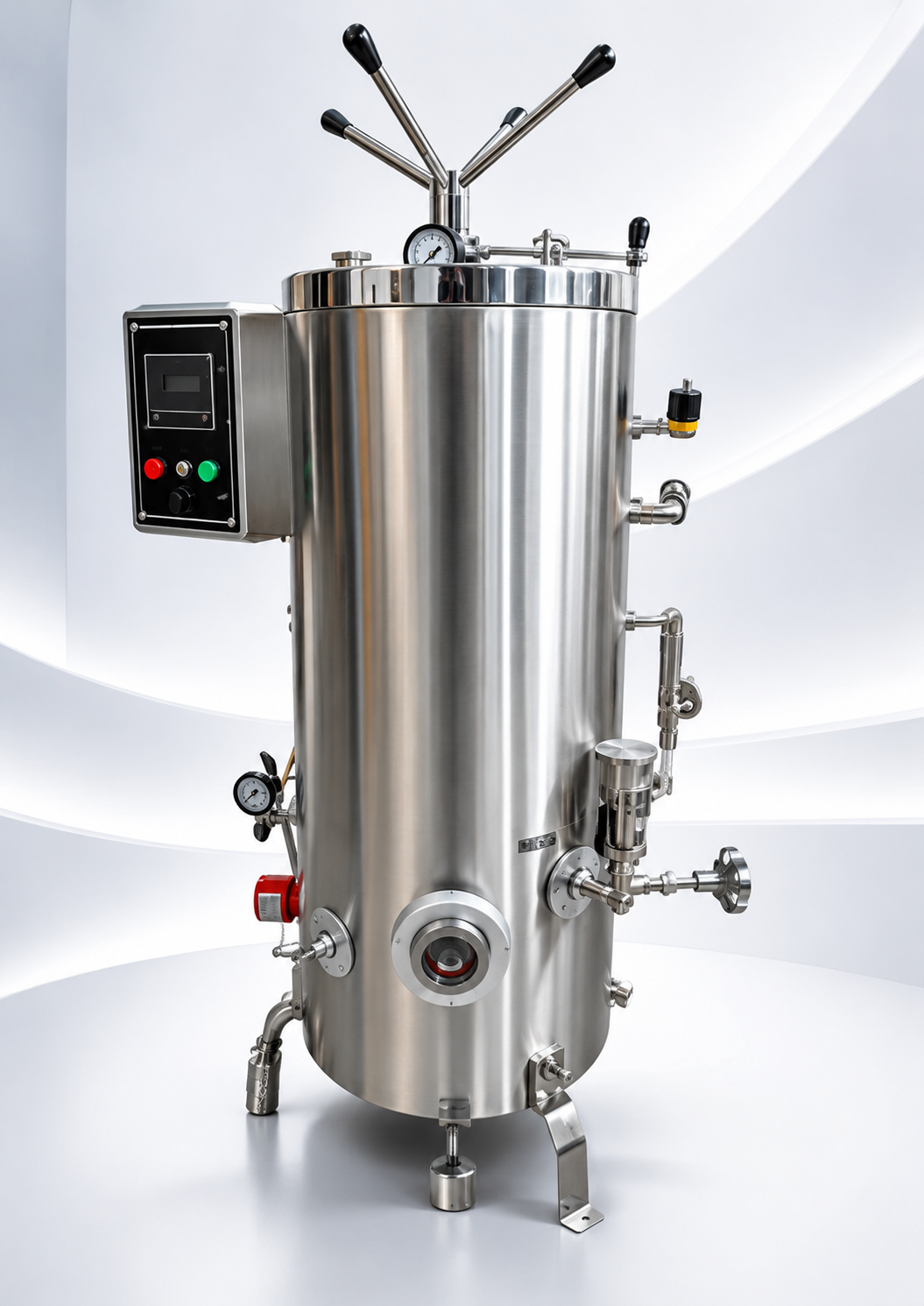
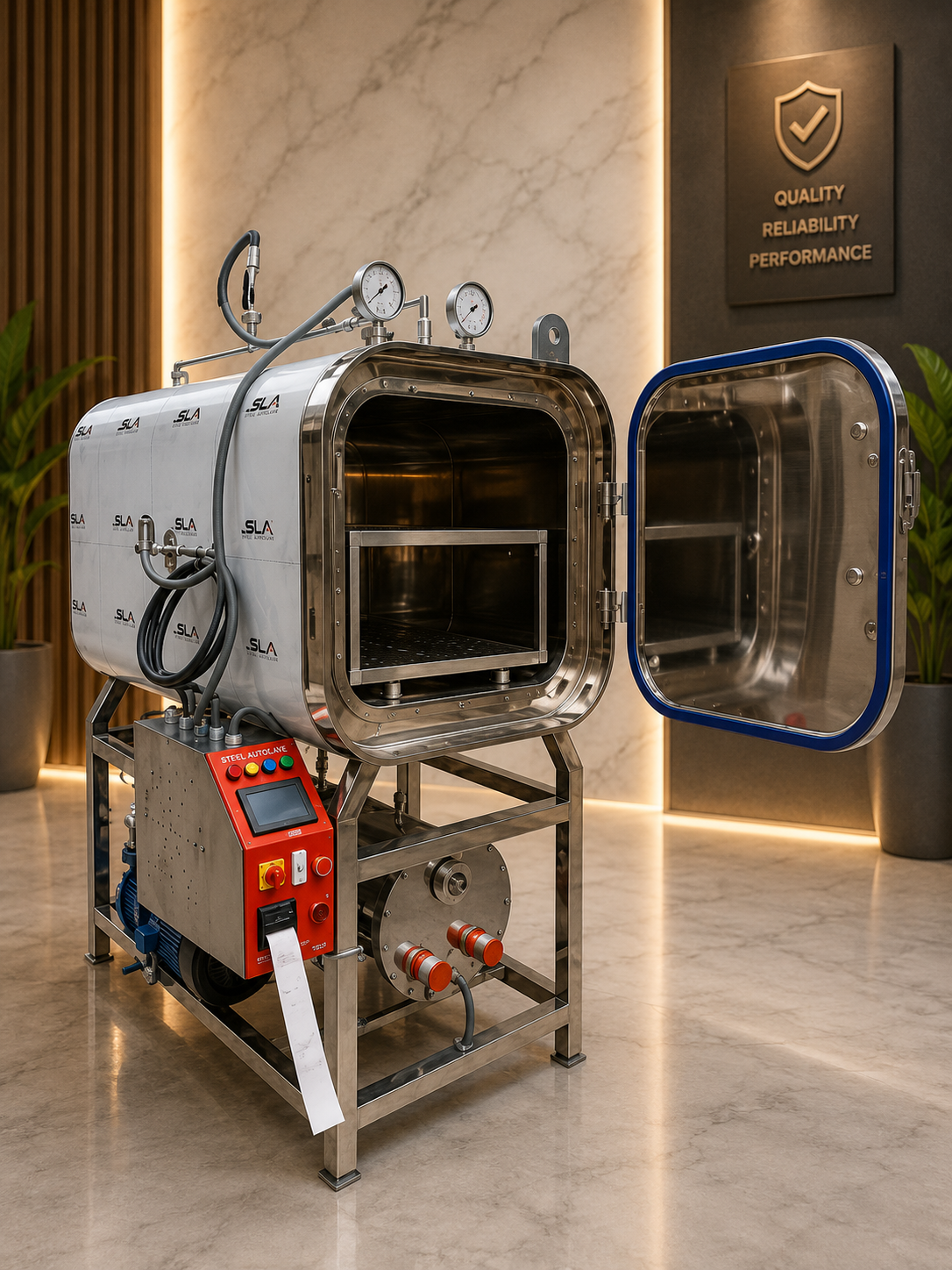
Steam sterilizers in horizontal and vertical configurations for medical, laboratory and industrial loads that can tolerate heat and moisture.
Steam autoclaving can provide faster turnaround than ETO when the product and packaging are suitable for high-temperature sterilization.
View Details
Hydrogen peroxide plasma sterilizers provide another low-temperature sterilization option, while washer disinfectors and ultrasonic cleaners support cleaning and preparation before sterilization.
Selecting cleaning and sterilization equipment together can help facilities plan an integrated instrument processing workflow.
View DetailsETO sterilization requirements vary according to the product, packaging, batch size and operating environment. The following are common application areas for ETO sterilization equipment.
Hospitals and central sterile supply departments can use ETO sterilization for selected heat-sensitive instruments, devices and packaged items that are not suitable for steam sterilization.
Medical device manufacturing units in Punjab may require terminal sterilization of products in their final packaging, with repeatable cycle control and recorded process parameters.
Pharmaceutical, laboratory and industrial facilities can require low-temperature sterilization for selected materials and products. Programmable cycles can help when different loads require different process settings.
GS Enterprises supplies ETO sterilization systems for hospitals, pharmaceutical units, medical device manufacturers, laboratories and industrial facilities in Punjab. The equipment is designed for controlled low-temperature processing of products that may be damaged by steam or dry heat, including plastic medical devices, tubing sets, packaged components and similar materials.
Ethylene oxide can penetrate packaging and reach internal surfaces at temperatures well below typical autoclave conditions. This makes ETO sterilization useful for selected heat-sensitive products, long lumens and sealed packs. Because ethylene oxide requires controlled handling, the sterilization process also includes appropriate gas management and a post-cycle aeration stage.
A complete ETO installation involves more than the sterilization chamber. Gas supply and storage, exhaust routing, area gas detection, ventilation and operator procedures must also be considered. We explain what the equipment provides and what your Punjab facility needs to arrange before placing an order.
The right ETO sterilizer specification starts with the load rather than simply selecting a machine. Product material, packaging type, tray dimensions, batch quantity and expected daily throughput help determine the required chamber size and cycle configuration.
Facility conditions are also important. Available floor space, ceiling height, exhaust routing, ethylene oxide cylinder storage, ventilation and the aeration hold time should all be considered when planning an ETO sterilization system for a Punjab facility.
We work through these requirements before preparing a quotation so the proposed chamber and system configuration are suitable for your application. Share your product, load dimensions, batch size and site requirements for a more practical equipment recommendation.
A GS ETO sterilizer is supplied as a complete working system according to the configuration ordered. Key elements include:
Sealed chamber sized according to the required load, with a door arrangement designed to prevent access during stages where operation would be unsafe.
Control interface for selecting stored cycles, starting the sterilization process and monitoring the sequence from conditioning through aeration.
Controlled conditioning of temperature and humidity according to the requirements of the configured and validated process.
Controlled admission of ethylene oxide to the required process concentration and evacuation through the designated exhaust arrangement after exposure.
Cycle parameters are monitored during operation, with alarms and interlocks designed to identify defined process deviations and prevent unsafe operation.
A post-cycle aeration stage helps remove residual ethylene oxide from the load before the sterilized products are released for handling.
| SR. NO. | Material | Make / Grade |
|---|---|---|
| 01 | INNER CHAMBER SS | JINDAL / 304/316 |
| 02 | OUTER BODY SS | JINDAL 304 |
| 03 | GASKET | Silicon |
| 04 | GLASS WOOL | INSULATION 50MM |
| 05 | PLC | DELTA |
| 06 | HMI | DELTA |
| 07 | PNEUMATIC VALVE | JANATICS |
| 08 | CARTRIDGE | GS ENTERPRISES |
| 09 | COMPRESSOR | MARTRIX |
| 10 | HEATER | ARTI |
| 11 | SENSOR | THERMOTECH |
| 12 | AIR CYLINDER | JANATICS |
| 13 | VACUUM GAUGE | MASS |
Purchasing an ETO sterilizer is a long-term equipment decision. Our process focuses on understanding your application, configuring the equipment around your requirements and supporting the system after installation.
We begin with your product, packaging, batch size and expected throughput, together with the room and installation constraints at your Punjab facility.
We prepare the equipment specification and quotation according to your requirements, including the site provisions needed for gas supply, exhaust and ventilation.
Equipment is manufactured at our works in Bawana Industrial Area. Standard 80 litre units and customized chamber configurations are supplied according to the confirmed requirement.
Installation and commissioning support is available, along with operator familiarisation covering the control system and relevant safety procedures.
Preventive maintenance and breakdown service support are available for equipment supplied by GS Enterprises, including customers located in Punjab.
If your application is better suited to steam or hydrogen peroxide plasma, we can discuss those options as well. The right sterilization method depends on the product, packaging, temperature tolerance and required throughput.
Different products require different sterilization methods. The choice should consider material compatibility, packaging, cycle time, throughput, site requirements and operating cost.
Low-temperature sterilization with the ability to penetrate sealed packaging and selected long lumens. The process requires controlled gas handling and post-cycle aeration.
Steam sterilization offers relatively fast processing for products that can tolerate heat, pressure and moisture. It is not suitable for products that may be damaged by these conditions.
A low-temperature sterilization option with faster turnaround than many ETO processes and no requirement for ethylene oxide gas storage. Application suitability depends on the product and device geometry.
Effective cleaning is an important part of instrument processing. Washer disinfectors and ultrasonic cleaners can be considered alongside sterilization equipment where required.
Where some products tolerate steam while selected heat-sensitive products require ETO, a steam cum ETO configuration can be considered for appropriate applications.
Daily volume and required turnaround can influence the choice of sterilization technology. ETO cycle and aeration time should be considered when planning production schedules.
Share your product type, packaging, batch size and daily volume with GS Enterprises to discuss the sterilization method and equipment configuration suitable for your Punjab facility.
Ethylene oxide requires controlled handling because of its hazardous properties. Depending on the configuration ordered, the equipment includes provisions such as gas detection, alarms, door interlocks and controlled exhaust arrangements.
Cycle parameters are monitored during operation, helping operators identify defined deviations. The controlled aeration stage is also part of the automatic sterilization sequence.
The installation site must plan for appropriate room ventilation, ethylene oxide cylinder storage, exhaust routing, area monitoring and documented operator procedures.
These requirements should be planned according to the regulations and standards applicable to your facility. We can explain the equipment-side requirements before installation so that the Punjab site can be prepared in advance.
GS Enterprises supplies ETO sterilization equipment to customers in Punjab. Our registered office is in Rohini and our manufacturing works are in Bawana Industrial Area.
Supply and service requirements within Punjab can be discussed according to the installation location and equipment requirements.
GS Enterprises can discuss these points with you before you finalize your ETO sterilization equipment requirement in Punjab.
Check whether your product requires low-temperature sterilization, whether the complete cycle and aeration time fit your production schedule, and whether your Punjab facility can provide the required gas handling, ventilation and exhaust arrangements.
Where ETO is not appropriate, steam autoclaving or hydrogen peroxide plasma may be considered depending on the product and process requirements.
GS Enterprises manufactures sterilization equipment at its works in Bawana Industrial Area and serves
customers in Punjab requiring ETO sterilizers, autoclaves, hydrogen peroxide plasma systems, washer
disinfectors, ultrasonic cleaners and bio safety cabinets.
Our product range allows customers to discuss different sterilization technologies according to their
load, chamber capacity, temperature tolerance, packaging and throughput. If Ethylene Oxide is suitable
for your application, we can configure an ETO sterilization system around those requirements and
provide installation and service support in Punjab.
The GS-ETO-80 is the standard 80 litre configuration. Larger chambers and alternative cycle configurations can be made to order, with final specifications confirmed according to the application and installation requirements.
| Parameter | Specification |
|---|---|
| Equipment type | Ethylene oxide (ETO) sterilizer |
| Model | GS-ETO-80 |
| Chamber capacity | 80 litres (larger sizes made to order) |
| Operation | Fully automatic |
| Sterilant | Ethylene oxide gas |
| Process type | Low-temperature sterilization |
| Cycle control | Programmable, stored parameter sets |
| Temperature control | To validated process requirement |
| Humidity control | To validated process requirement |
| Safety system | Gas detection, alarms and door interlocks as configured |
| Aeration | Controlled post-sterilization aeration |
| Typical application | Heat-sensitive medical, pharmaceutical and industrial products |
Common questions about ETO sterilizers, Ethylene Oxide sterilization, cycle requirements, safety provisions, chamber capacities and equipment supply in Punjab.
An ETO sterilizer uses ethylene oxide gas to sterilize suitable products at low temperatures. The process includes conditioning, gas exposure and a controlled aeration stage to remove residual ethylene oxide before the load is handled.
ETO can be suitable for selected heat-sensitive medical devices, plastic components, tubing sets, packaged products and other materials that may not tolerate conventional steam sterilization. Compatibility should be evaluated for each specific product, material and packaging configuration.
Total ETO cycle time depends on the product, packaging, chamber load and validated process parameters. Aeration can add significant time after gas exposure, so complete turnaround should be considered when planning an ETO sterilization process.
The GS-ETO-80 is the standard 80 litre model. Larger ETO sterilizer chambers can be made to order according to tray dimensions, batch quantity, throughput and available installation space.
Ethylene oxide requires strict engineering and operational controls because of its hazardous properties. Appropriate ventilation, gas detection, exposure monitoring, door interlocks, exhaust arrangements and documented operating procedures are important for a properly managed ETO installation.
Some materials can absorb ethylene oxide during the sterilization process. Controlled aeration helps remove residual gas from the load before the sterilized products are released for handling or use. The required aeration time depends on the material, packaging and validated process.
The choice depends on product compatibility, packaging, device geometry, required turnaround time and facility requirements. ETO is used for suitable heat-sensitive products and can penetrate certain packaging and lumens, while hydrogen peroxide plasma provides another low-temperature option with different application limitations.
Installation planning may require suitable room ventilation, ethylene oxide cylinder storage, exhaust routing, area gas monitoring and documented operator procedures. Exact site requirements depend on the equipment configuration and applicable regulations.
GS Enterprises provides installation and commissioning support for supplied equipment, along with operator familiarisation, preventive maintenance and breakdown service support for customers in Punjab.
Call +91 8588885249 or email gs.inst2010@gmail.com. Include your product type, packaging, batch size, expected throughput, load dimensions and available installation space so the equipment can be discussed around your actual requirements in Punjab.